Black Stallion
2024 — 2025
—Due to a Non-Disclosure Agreement, some of the work has been generalized or modified.
During my time as UX UI Designer at Black Stallion , a product agency based in Buenos Aires, I worked on several initiatives, but two of them best represent my involvement.
1. The Horses House
The Horses House is a startup owned by Black Stallion itself. The product revolves around the equestrian industry, covering everything from events and services to horse commercialization, apparel, and equipment.
Designing a horse transportation solution
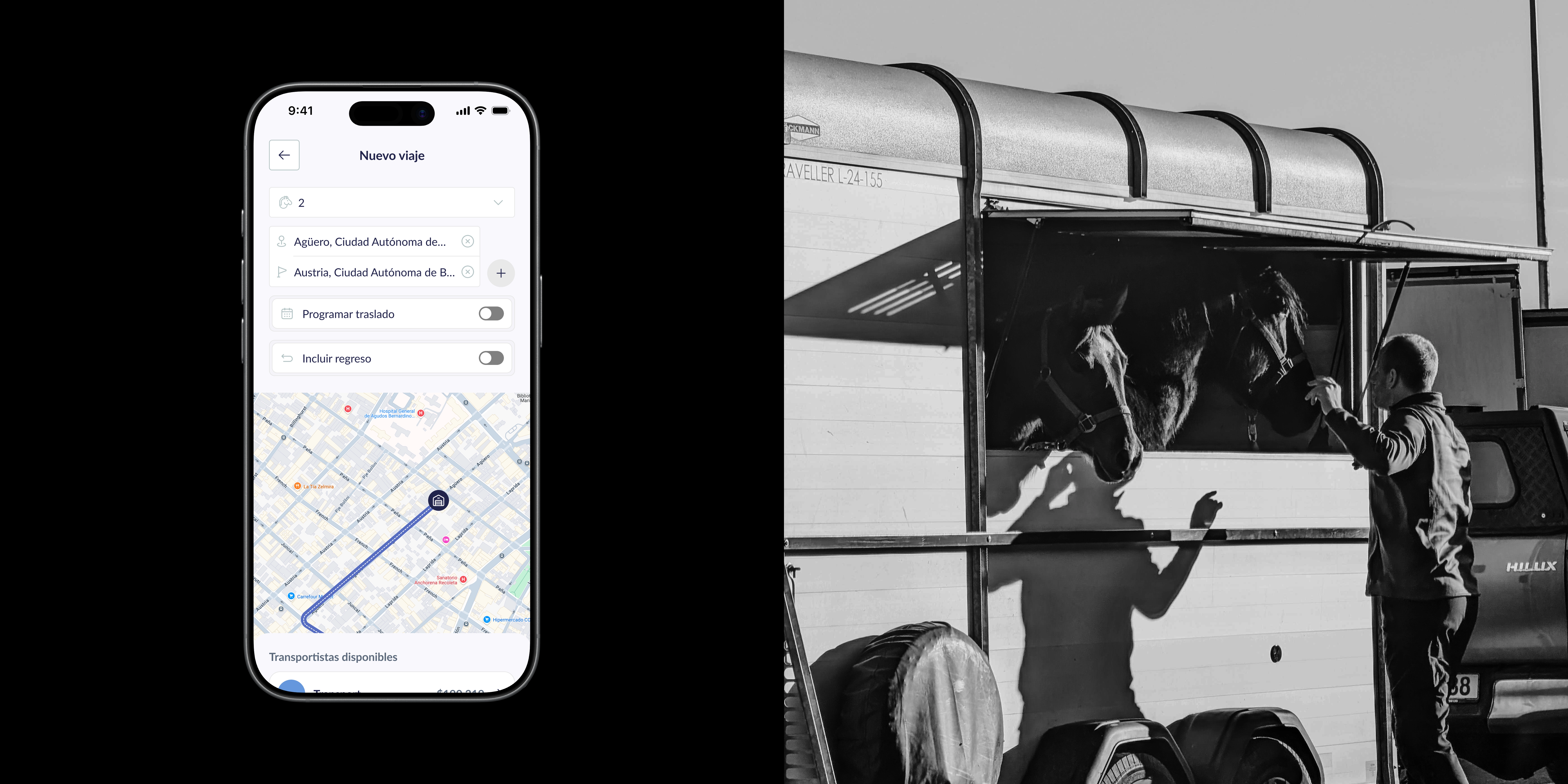
Context
Transporting horses involves specialized logistics. Owners must coordinate transportation for reasons such as competitions, veterinary care, and relocation between facilities. Horse transportation is usually planned in advance and requires coordination between owners and specialized transporters.
The goal of the project was to design a platform where horse owners could request transportation and connect with available drivers while managing the unique constraints of horse logistics.
Challenges
The main UX challenge was balancing simplicity and flexibility in the booking process. While a distance-based price could simplify the experience, real-world transportation often requires negotiation depending on route, number of stops, and availability.
Supporting both approaches introduced a trade-off: structured pricing enables fast booking, while negotiation provides flexibility but increases interaction complexity. The design needed to support both while keeping the booking flow understandable.
Solution
Inspired by transportation platforms such as Uber, the solution introduced a booking flow adapted to horse transportation needs.
- request transportation immediately or schedule trips in advance.
- define routes with multiple stops.
- receive distance-based price suggestions.
- negotiate pricing with transporters.
- track trip updates and communicate through in-app messaging.
Users could:
Additionally, the platform supported transportation browsing, allowing users to explore available drivers before initiating a booking request. This provided an alternative entry point for users who preferred discovering available options.
Designing a live horse auction platform
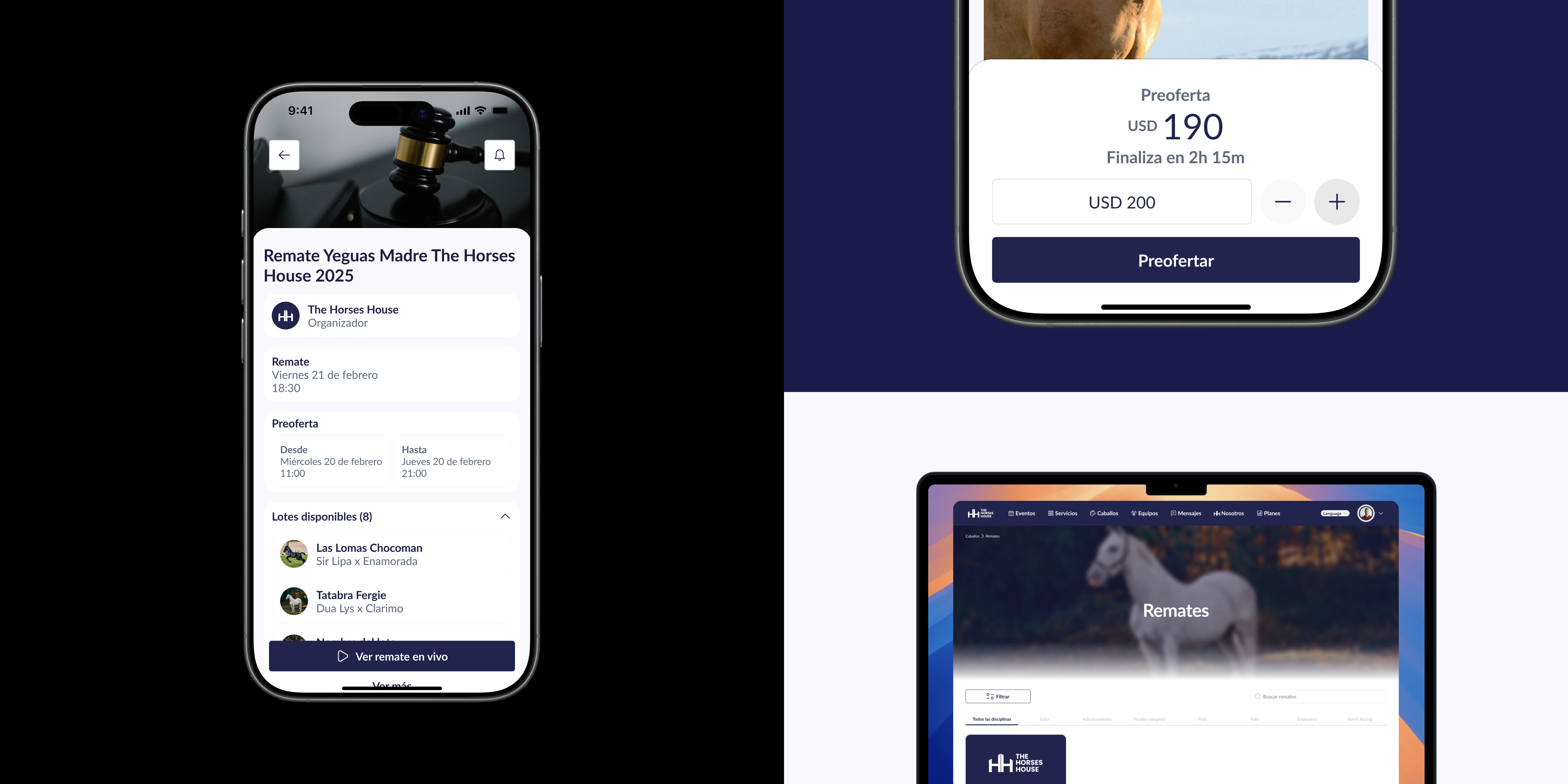
Context
Horse auctions combine multiple communication channels. In our stakeholder's case, bidders watched a live YouTube stream while placing bids through phone calls or WhatsApp messages. This required significant coordination from the auctioneer to track bids and communicate updates in real time.
Horses were auctioned in batches, with a pre-bidding window before the live event. During the auction, bids increased through fixed installment increments, such as: 12 × $500, 12 × $550, 12 × $600.
The goal of the project was to digitize this experience by creating a platform where bidders could watch the livestream and place bids in one place, while giving auctioneers a centralized interface to manage the event.
The project focused on the bidding experience, leaving payment flows, usually completed offline, for a later stage to avoid introducing too many changes to users at once.
Challenges
The core challenge was synchronizing the livestream experience with real-time bidding interactions.
- fast-paced bidding increments.
- clarity of installment-based pricing.
- supporting both mobile and web platforms.
- working within existing The Horses House design patterns.
Designing this required addressing several constraints:
Additionally, each horse needed to present detailed information such as lineage, images and videos, and veterinary materials (such as X-rays).
Solution
To support the bidding experience, a horse queue was introduced that visually represented the auction order and updated in real time alongside the livestream. This helped with temporal awareness, as users understand which horse was currently being auctioned, the ones coming next, and when to prepare for bidding.
The platform supported both mobile and web interfaces, allowing users to participate from different devices.
For auction managers, a web control panel was designed to centralize event management. From this interface, auctioneers could control the horse queue, update horse information and media and monitor bidding activity.
This allowed the auction to be managed from a single interface instead of coordinating across multiple communication channels.
2. Global payment platform
Designing for alternative payment methods
Context
Alternative payment methods (APMs) refer to any solution that is not a major international credit or debit card brand. These include domestic cards, cash-based vouchers, digital wallets, among others.
APMs usually require redirecting users outside the merchant environment, a situation that opens the door to uncertainty.
Challenges
- Transaction clarity
Users needed to clearly see payment amount, due dates, and payment instructions. - Trust
After returning from an external app, users needed clear confirmation that the payment step was completed. - Cross-device consistency
Payment flows had to remain understandable across desktop, mobile, and redirection to external apps.
Solution
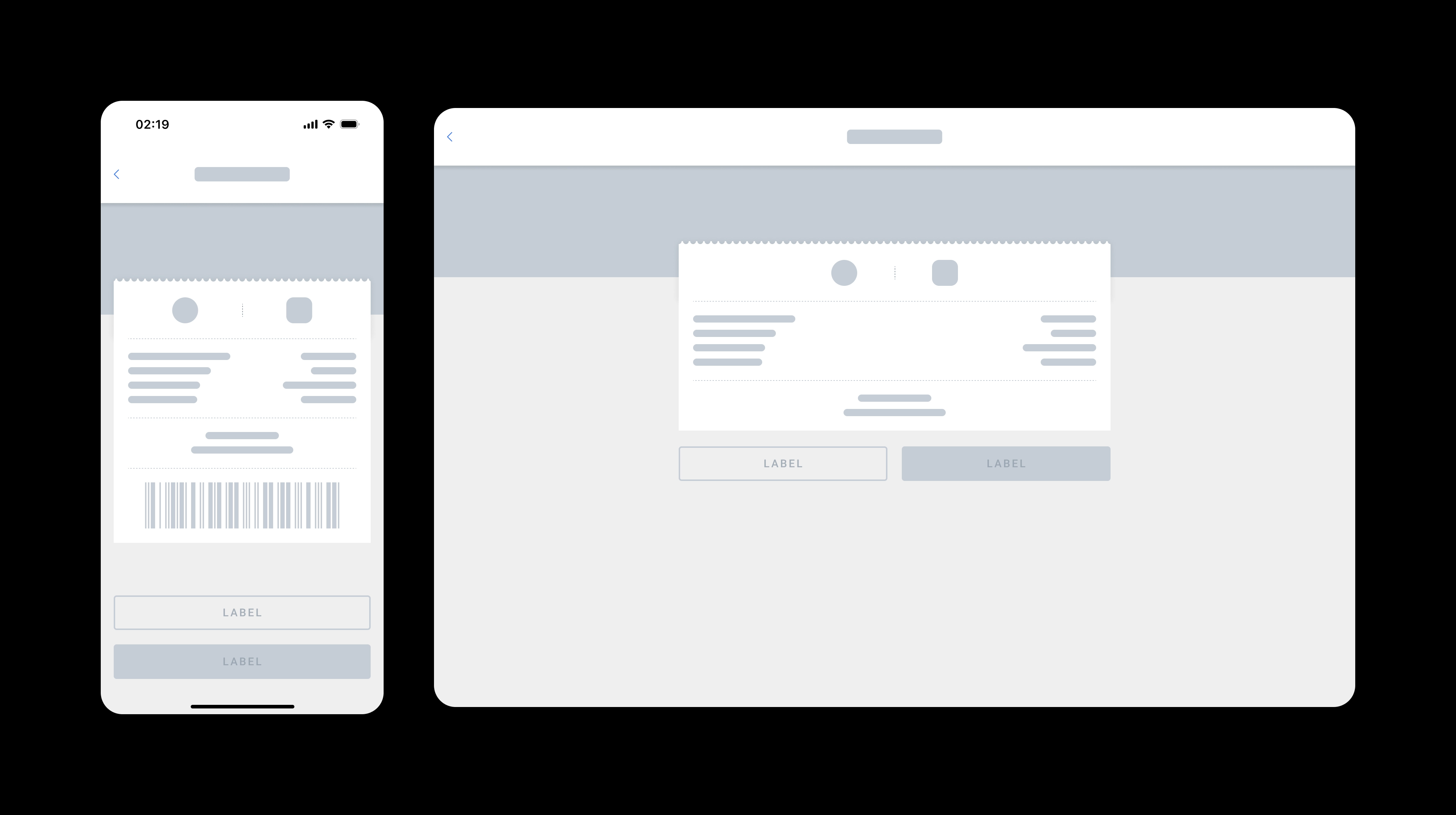
Given how critical confirmation and trust signals are in APMs experience, the solution encompasses review and confirmation interfaces, in which summarized payment information was presented clearly with unmistakable instructions before and after redirection, while staying aligned with the brand’s UI system for mobile and desktop layouts.